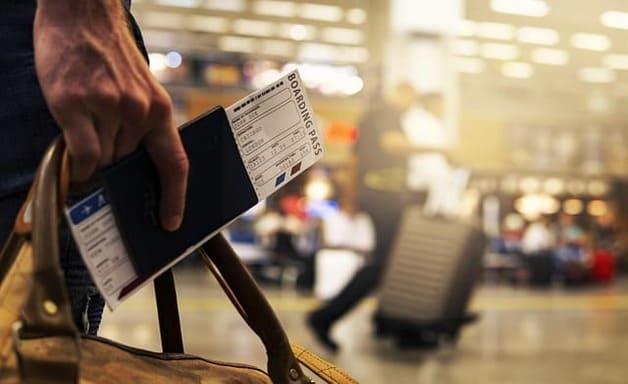

Traveling to Nigeria involves several important checks at the border, including immigration control and customs screening. Understanding how the process works before you arrive can help you avoid delays to make a smooth entry.
As part of this process, all travelers must complete the Nigeria Landing Card before arrival. Here, we explain what else you need to prepare for Nigerian customs and border control checks.
Understanding Nigeria Border Control
Local border controls are primarily managed by the Nigeria Immigration Service and the Nigeria Customs Service. These agencies are responsible for managing the entry and exit of all travelers to the country.
This process takes place at:
- Major international airports such as Lagos’ Murtala Muhammed International Airport (LOS) and Abuja’s Nnamdi Azikiwe International Airport (ABV)
- Other land and sea entry points
When you arrive, immigration officers need to verify your identity and travel purpose, and check any required documentation. This can include:
- Document checks on arrival
- Questions about your trip (purpose, duration, accommodation)
- Biometric verification (fingerprints or photo)
- Transfer to customs control after passport clearance
All parts of the border control procedure are designed to make sure visitors comply with Nigeria’s immigration laws and entry requirements.
Required Documents at the Nigerian Border
Before traveling to Nigeria, you should prepare all the necessary documents in advance to avoid delays at immigration. You must show:
- Valid passport — with at least 6 months’ validity from your arrival date
- Approved e-Visa or embassy visa — if required for your nationality
- Completed Nigeria Landing Card — mandatory for all travelers
- Proof of vaccination — only if applicable (e.g. visitors from Yellow Fever regions)
Important: You must present the Nigeria Landing Card when requested. Each traveler needs their own form, including children and babies.
Nigeria Customs Regulations
After passing immigration, you will proceed to customs control. This step focuses on the goods you’re bringing into the country.
You may be required to complete a customs declaration based on the types and quantities of items you’re carrying. There are limits on the amount of currency and other goods you can bring. Certain goods exceeding these restrictions must be declared on arrival.
You may pass through:
- Green channel (nothing to declare)
- Red channel (items to declare)
Failure to declare restricted or high-value items can result in fines or confiscation, so it’s essential to complete the process correctly and honestly.
What Items Are Prohibited or Restricted in Nigeria?
To avoid issues at customs, you must respect the rules on items that are not allowed or require special authorization. Items in the table below are restricted, meaning you may need to declare them at customs.
Items that are not permitted include:
- Illegal drugs and narcotics
- Firearms and ammunition (without permits)
- Counterfeit goods
- Certain food products and agricultural items
- Hazardous materials
- Pornographic materials
You should not bring any items in this list with you into Nigeria, unless you have a pre-approved permit.
How NG Entry Form Helps Travelers
NG Entry Form is an independent agency that assists travelers with obtaining the Nigeria Landing Card before their trip.
We are not part of the Nigerian government. Our role is to simplify the process and help you complete your application correctly.
What we offer
- User-friendly application form
- Expert review to reduce errors
- Faster processing options
- Dedicated customer support
- Assistance in case of missing or incorrect information
By using NG Entry Form, you can avoid common mistakes that may lead to delays at border control.
Step-by-Step: What Happens on Arrival in Nigeria
Understanding the arrival process can help you move through the airport or border crossing more efficiently. Here’s what to expect:
Step 1: Immigration (border control)
Present your passport, visa (if required), and Nigeria Landing Card.
Step 2: Document verification
Officers may ask questions about your trip and verify your details.
Step 3: Biometric screening
In some cases, fingerprints or facial recognition may be required.
Step 4: Customs inspection
Proceed to customs and declare any required items.

Tip: You must complete your Nigeria Landing Card before departure. Keep both digital and printed copies ready to present at the airport.
Apply for Your Nigeria Landing Card
Before traveling, make sure you complete your Nigeria Landing Card to avoid delays at the border.
With NG Entry Form, the process is simple and fast:
-

-

Pay the fee
-

Get confirmation via email
The entire process is designed for efficiency, allowing travelers to focus on their visit rather than complex paperwork. Please note that the Nigeria Landing Card is a mandatory document you must present upon arrival.
FAQs
What documents do I need to show at Nigeria border control?
Toggle faqs
You’ll need a valid passport, Nigeria Landing Card, and visa (if required). If you’ve traveled from an endemic area, you’ll also need proof of vaccination for Yellow Fever.
Is the Nigeria Landing Card mandatory for international travelers?
Toggle faqs
Yes, all travelers must complete and present the Nigeria Landing Card before entering the country. This includes child passengers in your party. You can fill out a form on behalf of a minor with NG Entry Form.
How does customs screening work in Nigeria?
Toggle faqs
After immigration, you pass through customs, where your luggage may be inspected. You must declare restricted or high-value items. Customs officers will explain if any duty tax must be paid.
What items must I declare upon arrival?
Toggle faqs
You should declare large amounts of cash (over $10,000), large quantities of valuable goods, commercial items, and certain medications.
What prohibited items should I avoid bringing into Nigeria?
Toggle faqs
You cannot bring weapons (without permits), counterfeit goods, or hazardous materials into Nigeria. There are also limits on carrying fresh food and animal products into the country.
Do I need a visa in addition to the Landing Card?
Toggle faqs
Depending on your nationality, a visa may be required in addition to the Nigeria Landing Card. If you can enter visa-free, the Landing Card is still mandatory.
How long does border control usually take?
Toggle faqs
Processing time varies but typically ranges from 20 minutes to over an hour depending on passenger volume. This can also vary depending on which airport or border point you arrive at.
Are biometric checks performed at Nigerian airports?
Toggle faqs
Yes, biometric checks such as fingerprinting or facial recognition may be conducted at major airports. Border officers decide whether to perform these checks on a case-by-case basis.